Data as Layer Zero
When discussing decentralized systems, protocols tend to receive a majority of attention. They are the glamourous centerpiece around which an ecosystem can be built. I see an equally compelling argument for data instead acting as the “base layer” (to whatever extent one may exist). On your filesystem SVGs, MP3, and JPEG, exist independent of any specific application. On blockchains, tokens standards exist independent from Uniswap or OpenSea. These are all formats for structured information, compatible with any application which implements it. I think of these in contrast to an email, where there is no meaningful storage system outside an inbox. And as a result of their independence, I can freely modify a jpeg with a large variety of tools. No plugin system or store is necessary as long as an application can read and write the data. Data formats do not impose a category
One reason, data’s value might not be as prominent is the dance between data and platforms. A new data format needs platform/product support to grow before it becomes a meaningful standard. After some size, a after which a lack of support will hurt platform’s growth. Large platform can push new standards into existence even without being open. Otherwise several smaller parties need to coordinate to get meaningful adoption. This whole process means data in its early stages depends on the network effects of tools to gain value.
When it works? Fun, fun, fun!
 Maxim Leyzerovich has an inspiring thread of the forms this could take.
But at its worst, we get monopolies. Most of my earlier examples already have improved, less widely used, alternatives. The open process is too slow and adoption shifts to one entity’s improved (but, closed) version. They decide the standard for everyone else and dictate its use (see early pdfs, or current h265 and fbx). So how do we keep standards open and innovative without falling to the control of a single party? One way I can see is making the improvement so good it outweighs pain of transition (much easier said than done).
No pain would be nicer though. Maybe this is where protocol-product fit splits are important? 🤷 They can lower the switching cost for products built on top, allowing us to migrate between open standards as they evolve and grow. Platforms might also realize its in their best interest to work together, in a similar process to Market-Protocol Fit
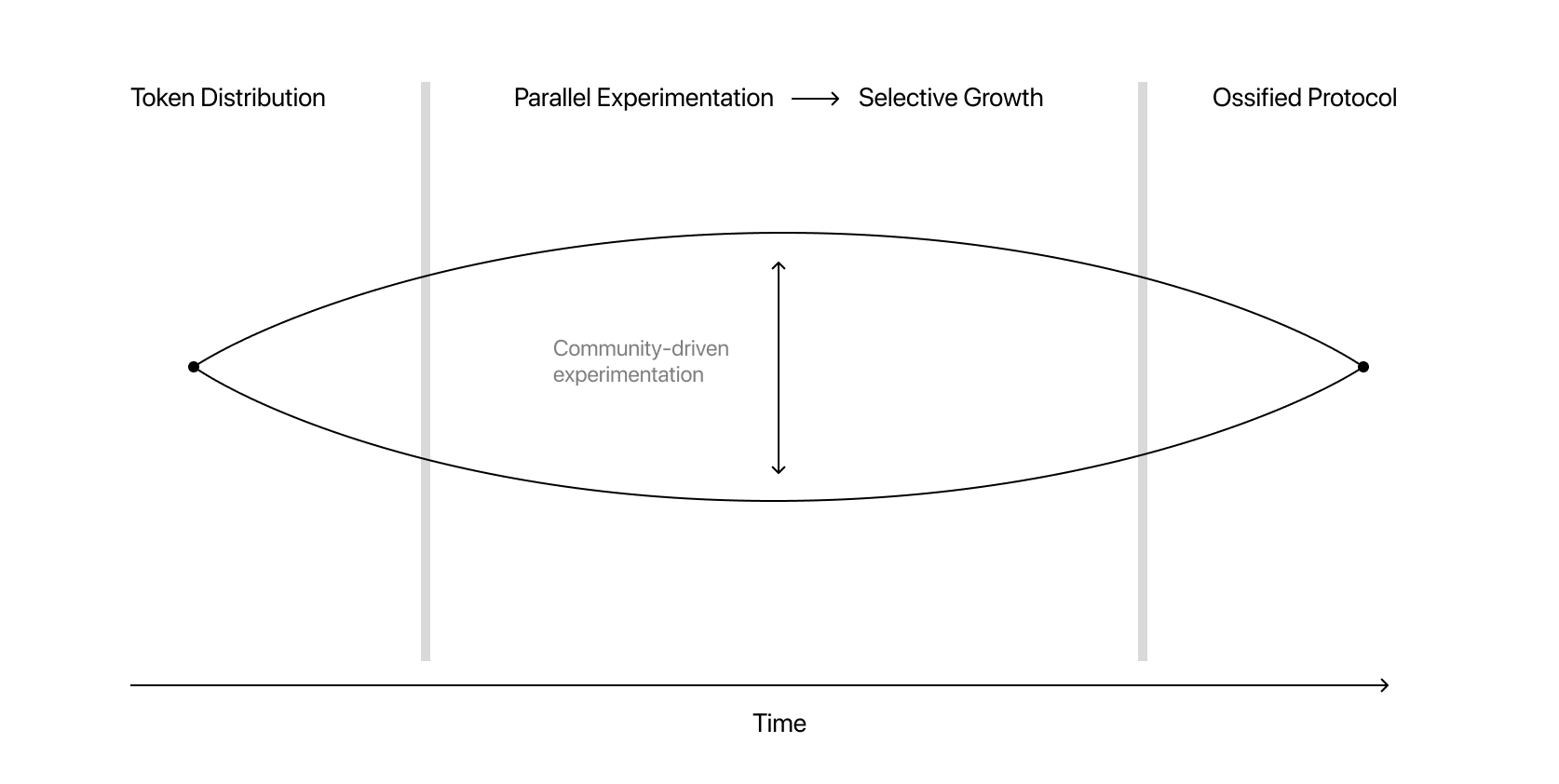
Most things do eventually become irrelevant or break down so the goal should rarely be to make the perfect standard or protocol. The interesting part is the dance; the spread and growth of new standards, dominance, and then eventual ossification as the cycle begins again.